πŸ“ž Call for a Free Quote: 888-619-6082

Concrete Pressed Piers in Fort Worth, TX

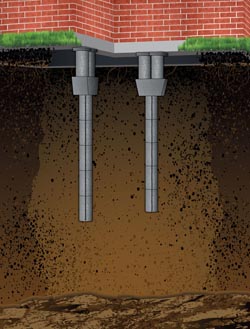
Diagram of concrete pressed piers installed beneath a brick foundation corner

Concrete pressed piers, sometimes called concrete cylinder piers, are precast concrete sections pressed into the soil in a stack, using the structure's weight for resistance similar to steel push piers. They're generally a lower-cost option than steel piers, which makes them a reasonable choice for certain soil conditions and load requirements, though they typically need to be spaced more closely together than steel piers to distribute the same total load.

Because concrete pressed piers rely more on friction and end bearing across a shallower zone than deep steel piers driven to bedrock, they work best in soil conditions where stable bearing strata is reachable at moderate depth, rather than situations requiring very deep pier placement. We assess soil conditions before recommending this system, since installing concrete piers where soil conditions really call for deeper steel piers just sets up a repeat settlement problem down the line.

When concrete pressed piers are the right fit for a property's soil and load conditions, they offer a genuinely solid, cost-effective stabilization option β€” we're not steering every job toward the most expensive system, only toward the system that actually matches the site.

πŸ“ž Call 888-619-6082

Request This Service

* Indicates required field

Cost vs. Steel Piers

Concrete pressed piers generally cost less per pier than steel systems but often require more piers total to distribute the same structural load, so the total project cost difference is sometimes smaller than the per-pier price difference suggests. We provide a real comparison for your specific situation rather than a blanket recommendation either way.

How Concrete Pressed Pier Installation Works

Installation starts the same way as steel push piers β€” excavating access at each pier location around the foundation perimeter β€” but instead of driving a continuous steel pipe, precast concrete cylinder sections are stacked on top of each other and pressed into the soil using hydraulic jacks braced against the structure's own weight. Each section interlocks with the one below it, building the pier downward in short segments until it reaches a depth where soil resistance indicates adequate bearing capacity for the load at that point. Because the piers are shorter, stackable sections rather than long continuous steel, more piers are typically needed per foundation to distribute the same total load across more bearing points. Once piers are set, brackets connect them to the foundation and lift is applied where called for, similar to the steel pier process.

Precast Concrete Pier Specifications

Concrete pressed piers are manufactured from steel-reinforced concrete, precast to a consistent diameter and length so each section presses evenly and interlocks securely with the sections above and below it. Reinforcement inside the concrete gives the piers the structural strength to handle installation pressure and long-term load without cracking, which matters given that a cracked pier underground is effectively invisible until problems resurface at the surface. We use manufactured pier products built to documented load specifications rather than generic precast concrete, since the pier's rated capacity is what our repair plan's pier count and spacing calculations are actually based on.

Soil Conditions Where Concrete Piers Make Sense

Concrete pressed piers work best where stable bearing soil is reachable at a moderate depth, since they rely more on end bearing across a shallower zone than deep steel piers driven to distant bedrock. In parts of the Fort Worth area where competent soil sits closer to the surface, concrete piers can provide adequate support without the extra depth and cost of a deep steel system. Where soil reports or installation resistance show that stable bearing strata sits much deeper, steel piers become the more reliable choice, since installing concrete piers short of adequate depth in those conditions sets up a repeat settlement problem rather than solving the original one.

Good Candidates for Concrete Pressed Piers

Lighter residential structures, additions, and foundations with moderate, fairly even settlement tend to be good fits for concrete pressed piers, particularly where the soil report supports moderate-depth bearing. Homeowners working within a tighter repair budget who have soil conditions that genuinely support this system get a solid, structurally sound repair without paying for deep steel piers their soil doesn't require. We won't recommend concrete piers just because they cost less if your specific soil and load conditions call for a deeper steel system β€” that trade-off only makes sense when the site conditions actually support it.

How Load Path Differs From Steel Pier Systems

Steel push and helical piers are engineered to reach deep, essentially permanent bearing soil or rock, transferring load well below the zone where seasonal clay movement happens. Concrete pressed piers, installed to a shallower depth, carry load through a combination of end bearing and friction along the pier's length within soil that β€” while more stable than the surface clay β€” can still be closer to the zone affected by seasonal moisture change than deep steel piers reach. That's part of why concrete piers require closer spacing and careful soil assessment: distributing load across more, moderately-deep piers compensates for not reaching the same ultimate bearing depth steel systems do.

Warranty and Engineering on Concrete Pier Repairs

Concrete pressed pier installations carry the same written, transferable structural warranty we provide across our pier systems, and we're insured for the work performed. Because getting pier count and spacing right matters even more with a shallower-bearing system, we lean on soil report data and, for larger jobs, an independent Texas structural engineer's review of the pier plan before installation. If concrete piers turn out not to be the right fit for your soil once we're into the assessment, we'll say so and recommend steel piers instead rather than installing a system that won't hold up. We also keep installation records β€” final depth, pressure readings, and pier spacing β€” on file for every concrete pier job, available to you or a future buyer on request.

Common Misconceptions About Concrete Piers

A lower price tag sometimes leads homeowners to assume concrete pressed piers are an inferior or outdated system compared to steel, but that's not accurate when they're matched to the right soil and load conditions β€” the tradeoff is depth and spacing, not quality. Another misconception is that a cheaper pier system means a shorter or lesser warranty; our written warranty terms are the same regardless of which pier system your foundation's conditions call for. The real risk isn't the material itself, it's installing concrete piers on a property where the soil report actually calls for deeper steel piers, which is exactly the situation our soil-first assessment process is built to catch before it becomes a repeat repair.

Areas We Serve

Proudly providing foundation repair across the region:

Get Concrete Pressed Piers in Fort Worth Today

Fast response, upfront pricing, and friendly local pros. Call now for a free quote.

πŸ“ž Call 888-619-6082