πŸ“ž Call for a Free Quote: 888-619-6082

Helical Piers in Fort Worth, TX

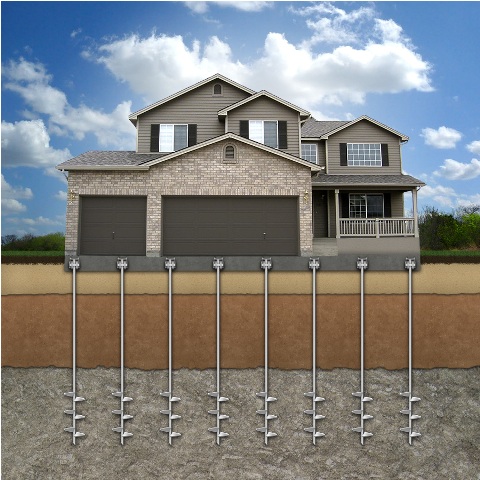
Diagram of helical piers screwed at an angle into soil to support a home's foundation

Helical piers work like a large screw, threaded into the soil with helical plates that distribute load along the pier's length rather than relying entirely on end bearing at a single depth. That installation method produces much less vibration than driven pier systems, which makes helical piers a common choice near existing structures, foundations with pre-existing cracking sensitive to vibration, or in tighter access situations where equipment for driven piers isn't practical.

Helical piers also allow for immediate load testing during installation β€” the installation torque correlates with the pier's load capacity, giving a real-time read on whether the pier has reached adequate bearing capacity as it's being installed, similar in principle to how push piers self-verify but through a different mechanism. This makes them a reliable choice for lighter residential structures and additions where a full push pier system would be more than the load actually requires.

We recommend helical piers based on structural load calculations and site conditions, particularly for smaller structures, porch and patio foundations, or situations where minimizing disruption to the surrounding property and structure matters.

πŸ“ž Call 888-619-6082

Request This Service

* Indicates required field

When Helical Piers Make Sense

Lighter structures, additions, porches, and situations where vibration near an existing foundation is a concern are all good fits for helical piers. For heavier main structures with significant settlement, we more often recommend steel push piers, but the right choice always comes down to load requirements and site conditions.

How Helical Pier Installation Works

Installation uses hydraulic torque motors to screw the pier into the soil, section by section, with additional lengths coupled on as the pier advances to the required depth. Unlike a driven pier, a helical pier's progress is measured by installation torque rather than resistance to driving force, and that torque reading correlates directly to the pier's ultimate load capacity β€” giving us a real-time number to compare against the engineered target for that pier location. Once a pier reaches its target torque and depth, a bracket connects it to the foundation, and where lift is called for, the pier is used to raise that section of foundation before being locked into final position. Because the screwing motion is comparatively gentle on the surrounding soil, nearby landscaping, hardscaping, and even the foundation itself see less disturbance than with driven pier systems.

Pier Configurations and Helix Sizing

Helical piers come with one or more helical plates welded along the shaft, and the number, size, and spacing of those plates is selected based on the soil conditions and load the pier needs to carry β€” more or larger plates spread load across more soil, which matters in variable clay layers common around Fort Worth. Shaft diameter and steel grade are likewise chosen to match the specific structural application rather than using one generic pier for every job. We use manufactured helical pier products built to published engineering specifications and load tables, so the torque-to-capacity correlation we rely on during installation is based on tested, documented performance rather than a rule of thumb.

When Vibration Sensitivity Points to Helical Piers

Additions built onto an existing foundation, porches and patios, and structures close to a neighboring building are all situations where minimizing vibration during installation genuinely matters, since a driven pier system can transmit enough vibration to disturb an adjacent structure's own settled condition. Homes with existing cracking that's cosmetically stable but sensitive to further disturbance are another case where the quieter installation method is the more conservative choice. Tight side-yard access or work near buried utilities, where the equipment footprint for a driven system isn't practical, also tends to favor helical piers. None of that means helical piers are automatically the lighter-duty choice in every sense β€” they're simply the better fit when vibration and access, not just load capacity, are part of the equation.

Helical Piers vs. Steel Push Piers

The core tradeoff is installation method versus load capacity: helical piers install with far less vibration and can be load-tested in real time through torque readings, while steel push piers generally handle heavier structural loads by driving straight to deep, stable bearing soil. For additions, porches, and lighter residential structures, helical piers are frequently the better technical fit and often comparable in cost. For a main structure with significant settlement or heavy masonry veneer, push piers more often end up the recommendation. We size this decision to your structure's actual load and site conditions rather than defaulting to whichever system we install more often.

What Drives Helical Pier Pricing

Pier count, target torque and depth, and helix configuration all factor into cost, and none of those are fixed numbers until the engineered load calculation and soil conditions for your specific foundation are known. Smaller structures like porches or additions typically need fewer, more modestly sized piers than a main house foundation, which keeps total project cost lower for those applications. Access and whether lift is part of the scope also affect labor time. As with every service we offer, we provide a written, itemized quote after the free inspection rather than a rough phone estimate.

Warranty and Engineering on Helical Pier Jobs

Helical pier installations are backed by our written structural warranty, transferable if the home sells, and covered under our general liability insurance. Because torque-to-capacity correlation depends on accurate engineering data for the specific soil and load involved, we reference manufacturer load tables and, for larger or more complex installations, bring in an independent, licensed Texas structural engineer to confirm the pier plan before installation begins. That documentation β€” torque readings, pier specifications, and any engineer's review β€” is available to you afterward, which matters if a future buyer or their lender wants to see it during a sale.

Common Misconceptions About Helical Piers

Some homeowners assume helical piers are only a light-duty or temporary fix because the installation looks less dramatic than a driven steel pier going in, but a properly engineered and torque-verified helical pier provides a legitimate, long-term structural repair for the loads it's rated for. Others assume torque testing during installation is just a sales talking point rather than real engineering data β€” in fact, the torque-to-capacity correlation is documented and tested by pier manufacturers, and it's the actual basis for confirming the pier reached adequate bearing capacity, not a marketing claim layered on afterward. We size every helical pier installation to a real load calculation, the same rigor we apply to any other pier system.

Areas We Serve

Proudly providing foundation repair across the region:

Get Helical Piers in Fort Worth Today

Fast response, upfront pricing, and friendly local pros. Call now for a free quote.

πŸ“ž Call 888-619-6082