πŸ“ž Call for a Free Quote: 888-619-6082

Steel Push Piers in Fort Worth, TX

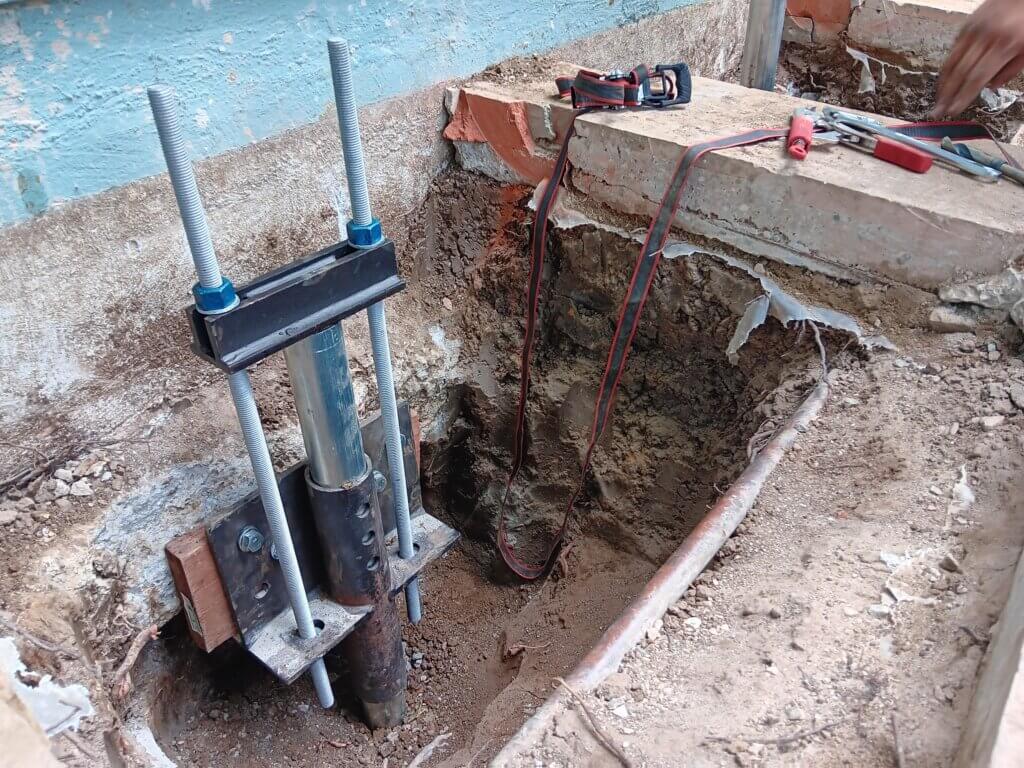
Hydraulic steel push pier jack installed beside a Fort Worth home's foundation wall

Steel push piers are hydraulically driven through the unstable expansive clay near the surface down to competent, load-bearing soil or bedrock, which in the Fort Worth area can mean driving considerably deeper than the visible foundation problem might suggest. Because they're driven to a stable bearing stratum rather than relying on friction with the surrounding soil, push piers provide reliable support that isn't subject to the same swelling-and-shrinking cycle that caused the original settlement.

We use steel push piers primarily on heavier structures and in situations where reaching deep, stable soil is the priority β€” they're driven using the weight of the structure itself as resistance, which means the installation process effectively confirms the pier has reached adequate bearing capacity as it goes in. Once piers are installed at the necessary points, brackets attach them to the foundation and, where lift is appropriate, hydraulic jacks raise the foundation back toward its original position before the piers are locked off.

Steel push piers carry a long track record in expansive clay conditions like North Texas's, and they're often the first system we consider for foundations with significant settlement or heavier structural loads.

πŸ“ž Call 888-619-6082

Request This Service

* Indicates required field

How Push Piers Confirm Their Own Bearing Capacity

Because push piers are driven using the structure's own weight as resistance, the installation process itself demonstrates that the pier has reached soil capable of bearing that load β€” a built-in verification that other pier types don't offer in the same direct way.

How Deep Push Piers Typically Go in Fort Worth Soil

Bearing depth varies more across the Fort Worth area than most homeowners expect, because the depth to stable soil or rock depends on local geology, not just how bad the visible settlement looks. Some lots reach competent bearing strata at a relatively shallow depth, while others β€” particularly where fill soil was used during original construction or where clay layers run unusually thick β€” require piers driven considerably further down before resistance confirms adequate capacity. We don't set a target depth in advance; each pier is driven until the installation resistance shows it has reached soil that can actually carry the load, which is part of why two piers on the same house can end up at noticeably different final depths. That depth-driven approach, rather than a fixed spec, is the main reason push piers hold up reliably in a soil type that behaves as inconsistently as North Texas clay does from lot to lot.

Pier Materials and Corrosion Protection

Push pier systems use galvanized or epoxy-coated steel pipe sections, connected with pin or coupler joints as each section is driven deeper, with pipe diameter and wall thickness selected based on the structural load the pier needs to carry. The galvanized coating is there specifically to resist long-term corrosion from soil moisture, since a pier is going to sit underground for the life of the house and isn't something anyone wants to dig up and inspect in ten years. Brackets connecting the pier to the foundation footing are similarly corrosion-resistant steel, engineered to transfer load from the structure into the pier without that connection point becoming the weak link in the system. We use pier products manufactured to published load ratings and engineering specifications rather than generic or undocumented steel, since a repair is only as reliable as the materials underneath it.

When a Foundation Needs Push Piers Specifically

Push piers tend to be the right call for heavier structures β€” brick or stone veneer homes, multi-story construction, or foundations carrying significant additional load β€” and for situations with substantial existing settlement where reaching deep, stable soil is the clear priority over minimizing installation vibration. Homes showing more severe settlement signs β€” foundation displacement of an inch or more, significant diagonal cracking through masonry, or a section of slab that's dropped noticeably relative to the rest β€” are also common candidates, since push piers' self-verifying installation process gives real confidence in situations where the stakes of an under-supported repair are higher. Lighter structures or additions where minimizing vibration near existing construction matters more often point toward helical piers instead, which is why load and site conditions, not preference, drive the recommendation.

Steel Push Piers vs. Helical Piers

Both systems are steel and both reach stable bearing soil, but they get there differently: push piers are driven straight down using the structure's own weight as installation resistance, while helical piers are threaded into the soil like a large screw and rely on helical plates to distribute load rather than end-bearing depth alone. That difference shows up most in vibration β€” helical installation is noticeably quieter and gentler on surrounding structure β€” and in load capacity, where push piers generally handle heavier structural loads more directly. Cost and installation time are often comparable for a given job, so the deciding factor tends to be structural load and site sensitivity rather than price. We evaluate both against your specific foundation's needs rather than defaulting to one system across every job.

What Affects Push Pier Installation Cost

The number of piers required and how deep each one has to be driven before reaching bearing capacity are the two biggest cost drivers, and neither is knowable until installation actually starts confirming resistance at depth. Access matters as well β€” piers installed along an open, clear foundation perimeter go faster than ones requiring excavation through landscaping, decking, or tight side-yard clearance. Bracket type and whether lift is being performed alongside stabilization (versus stabilization only) also factor into the total. We provide a written, itemized quote based on the elevation survey and structural assessment from your free inspection, not a flat per-pier rate that ignores how different your soil and access conditions might be from the house down the street.

Warranty and Engineering Behind Every Push Pier Install

Push pier installations carry our written structural warranty, transferable to a future buyer if you sell the home, and we're insured for the work we perform. For heavier structures or jobs with more complex load distribution, we involve an independent, licensed Texas structural engineer in reviewing pier placement and load calculations rather than relying solely on field experience, since expansive clay soil conditions here can complicate load paths in ways that benefit from an outside engineering review. We can provide documentation of pier specifications, installation depths, and β€” where an engineer was involved β€” the stamped report, both for your records and for any future buyer or lender who wants to see it.

Areas We Serve

Proudly providing foundation repair across the region:

Get Steel Push Piers in Fort Worth Today

Fast response, upfront pricing, and friendly local pros. Call now for a free quote.

πŸ“ž Call 888-619-6082